it would’ve scared the fuck out of me holy shit that’s big
So for anybody who doesn’t know, that ring of bubbles you see coming up before the humpback does is a “net” that the whale creates by swimming in a circle and blowing the bubbles from its blowhole. The bubble net disorients the krill/small fish/whatever and corrals them into one spot so that the whale can lunge up and feed as you see it doing. It’s most often done cooperatively in groups, and a whole bunch of whales will lunge up at once.
The blue flames of Indonesia’sIjen volcano are caused by super-heated sulfuric gases forcing their way to the surface. Upon hitting open air, the gases ignite, sometimes shooting flames as high as 16 feet.
Some of the gases condense into liquid sulfur, which continues to burn as it flows down the slopes, looking like blue lava.
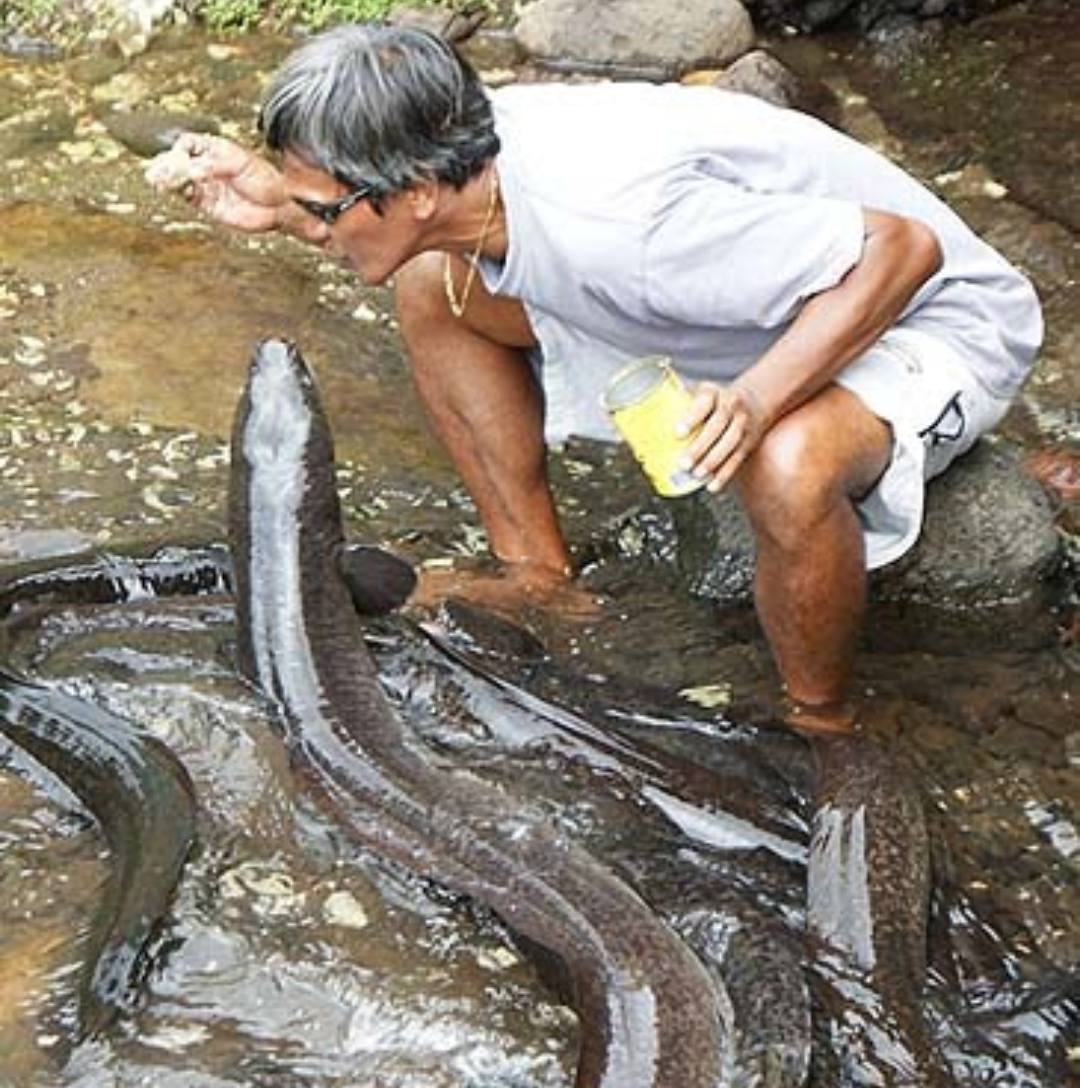
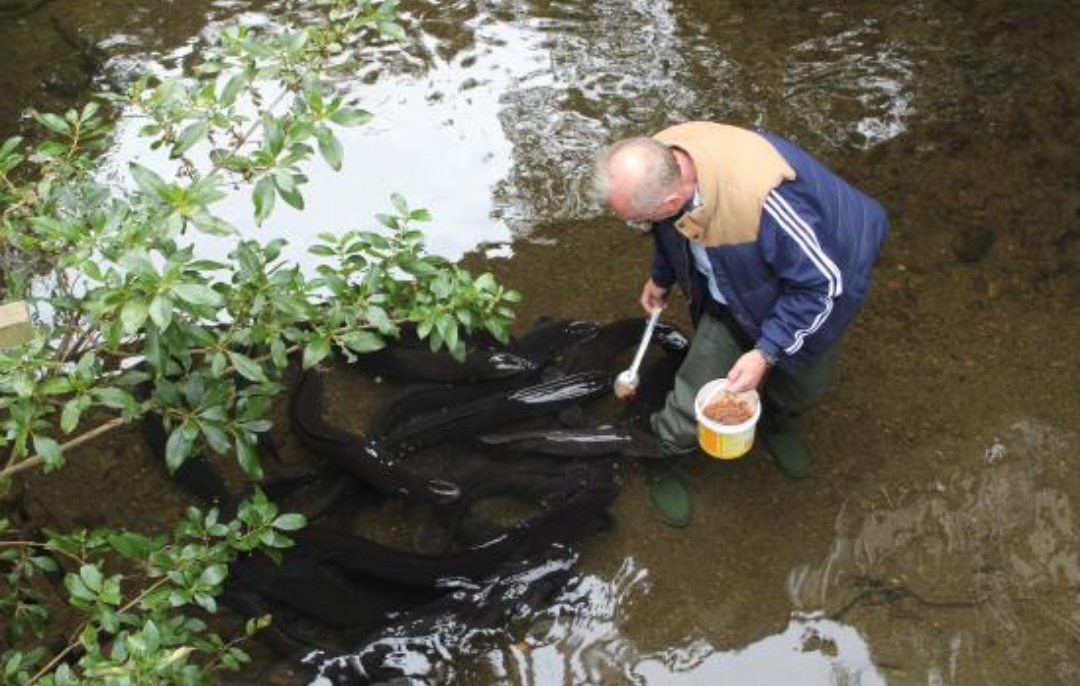
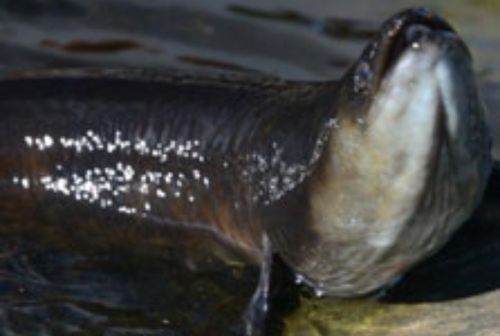
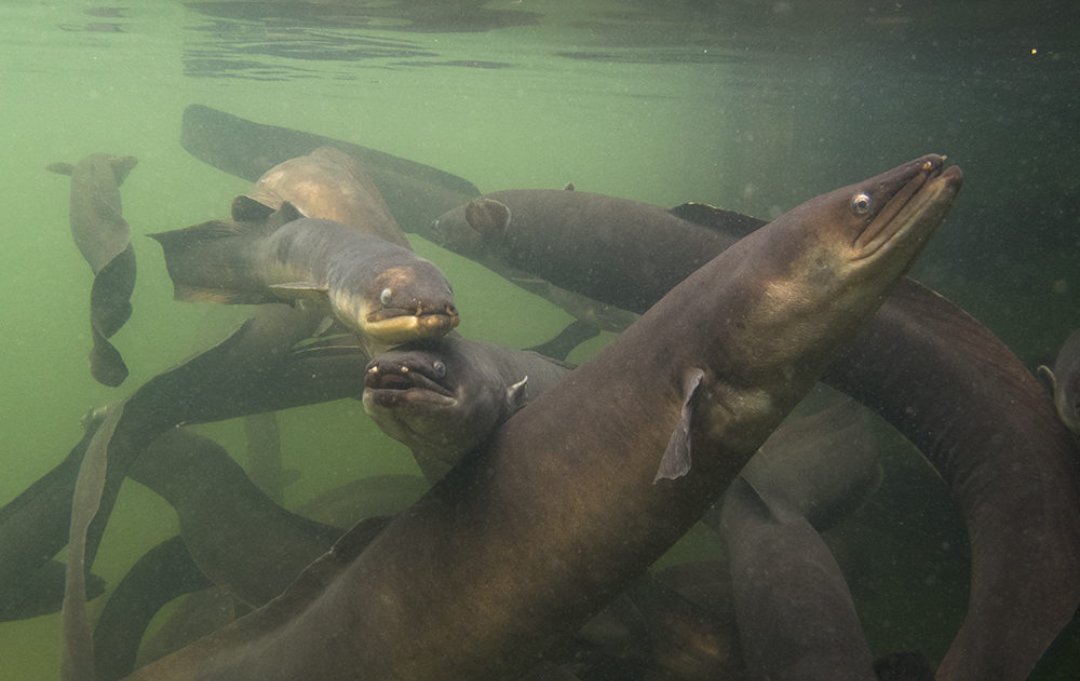
these wiggly fellas are Anguilla dieffenbachii, orNew Zealandlongfin eels. the ones in local rivers and preserves are known for being gentle, food-driven little weenies that beg tourists for food.
especially hungry wild specimens have been reported to attack humans and animals by swarming them and ripping off their flesh, but these ones are harmless!
@eelpatrickharris how can you tell them from other freshwater eels, I’m curious? I was looking around, and it seemed like while some are pretty different (some have spots, etc), there were a bunch that looked basically like this. I was thinking American eels, since OPs profile says Texas, but I certainly couldn’t tell for sure.
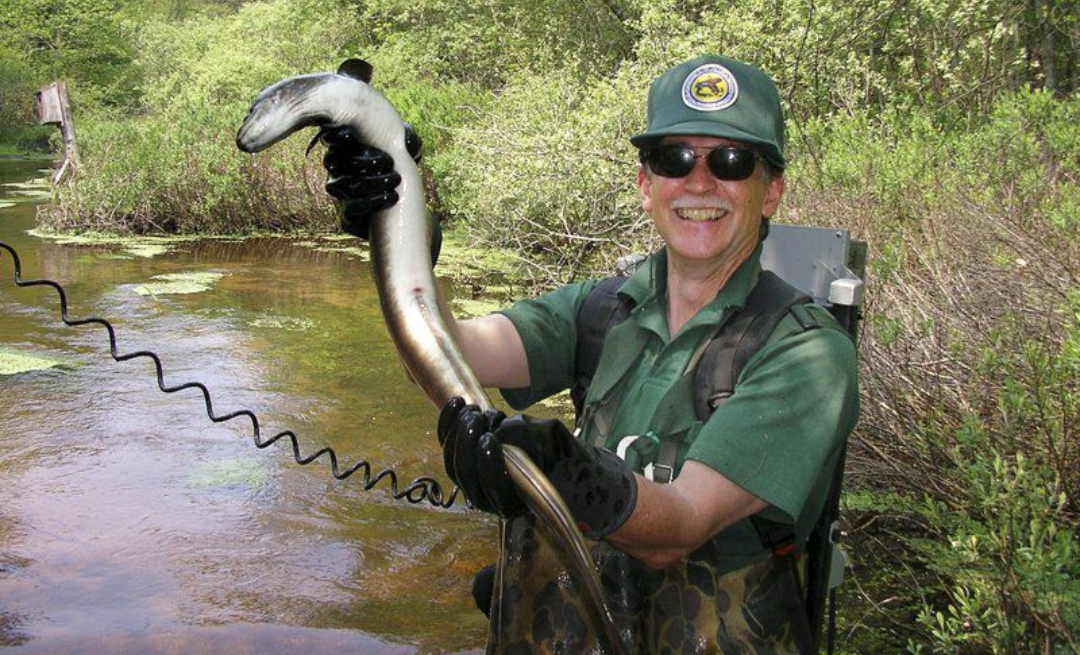
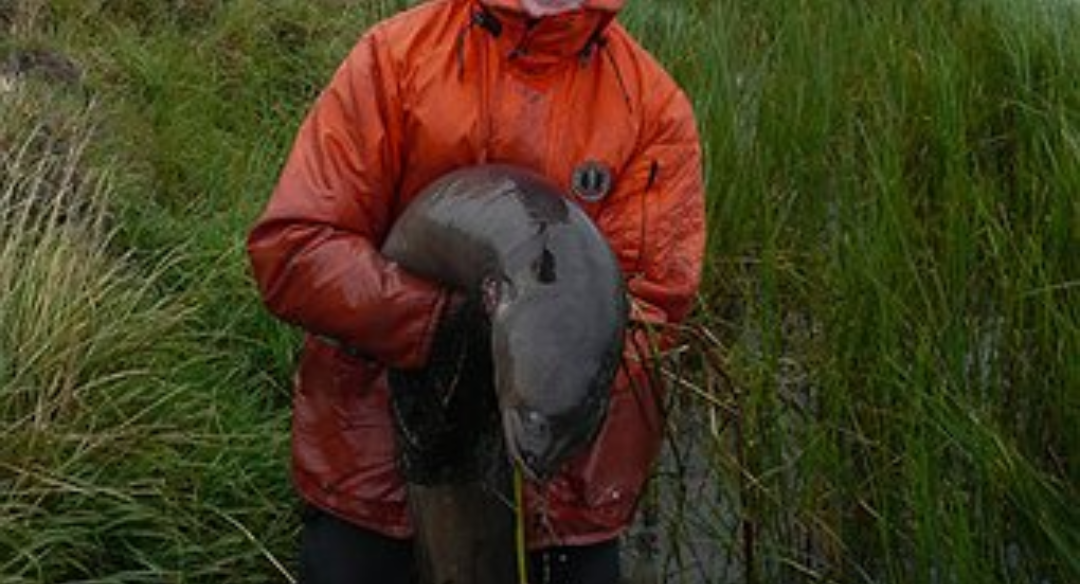
the size, behavior, and thickness! you see, NZ longfins are known for travelling in herds, and they are big boys. while the majority of anguilla eels grow to 3.3 feet on average—a. rostrata, a. anguilla, a. japonica—longfins can and will grow to 6 feet and over. there have been reports of them growing to 10 feet, but due to overfishing, any specimens like that are long gone.
also, girth. top is a fully grown american eel (4 feet is their absolute maximum, 3 is average), and below is a new zealand longfin who has a few feet to go.
when it comes to mannerisms, you’ll almost never see american eels in groups outside of mating season, when they all migrate to the sea. they’re highly aggressive, distrustful of humans, and bitey. longfins, on the other hand, stick together and act like big water dogs.
it’s a common thing in NZ to have “pet” eels. people will feed scraps of meat to the ones in their local streams, and they’ll start wiggling excitedly when they see you! those eels in the video are just getting really pumped because they think someone has treats. (even though it’s bread, which is bad for them.)
they’re not as scary as they seem. NZ longfin eels just want to be your friend!
(note: this only applies to ones that live in preserves and rivers near civilization. eels from huge lakes and remote areas are generally starving and i don’t recommend trying to be their friend.)
“The fearsome roar of Tyrannosaurus Rex as portrayed in film has left many a cinema-goer quaking in their seat.
But new research suggests the king of the dinosaurs made a far more sinister sound.
For a new BBC documentary, naturalist Chris Packham visited Julia Clarke, professor of Vertebrate Palaeontology at the University of Texas, to test out a the theory that dinosaurs actually sounded more like birds and reptiles, than today’s predatory mammals.” – Source
reblogging for later!
Okay, yeah, that is scary as FUCK, oh my god.
Oh yeah, that’s a sound that’ll haunt me. I mean they admit their science is far from conclusive, but that sound… yeah, if I heard that in an alley I’d start running like fuck.
https://youtu.be/cpipaUfcnmM you have to use headphones though otherwise you won’t be able to hear it, even with your sound turned way up
To quote the first line of a letter published today in the journal Nature, “Every supernova so far observed has been considered to be the terminal explosion of a star.” In other words, when a massive star blows itself up, it should remain dead. This is something astronomers have witnessed thousands of times before with absolutely no exceptions.
Honestly the mere fact that some people refer to Daddy Long Legs as “harvestmen” is creepier than 90% of all deliberately created horror but like the worst part is that the alternative is calling them Daddy Long Legs
True harvestmen, and not cellar spiders which are the other Daddy Long Legs, are truly omnivorous- known to eat everything from spiders, to fecal matter, to leaves and fungus… But one of the singularly most interesting habits of a particular European species is their almost symbiotic relationship with beehives– particularly man-made beehives. When a bee dies inside the hives, workers will remove the the corpse to just outside the hive just before dark. And the harvestmen? Well, they live up to their name.
So what you’re saying is that they are the grim reaper for bees.


 brianna's tumblr exports